Is the new Environmental Improvement Plan just hot air?
The big news in UK air quality this week is the publication of the government's new Environmental Improvement Plan. The headline-grabber has been a new commitment on PM2.5 - bringing annual mean concentrations down to 10µg/m³ by 2030. This is in line with the EU's targets (though not the WHO's more aggressive 5µg/m³ goal). More importantly, it's in line with the evidence on how fine particles cause illness.
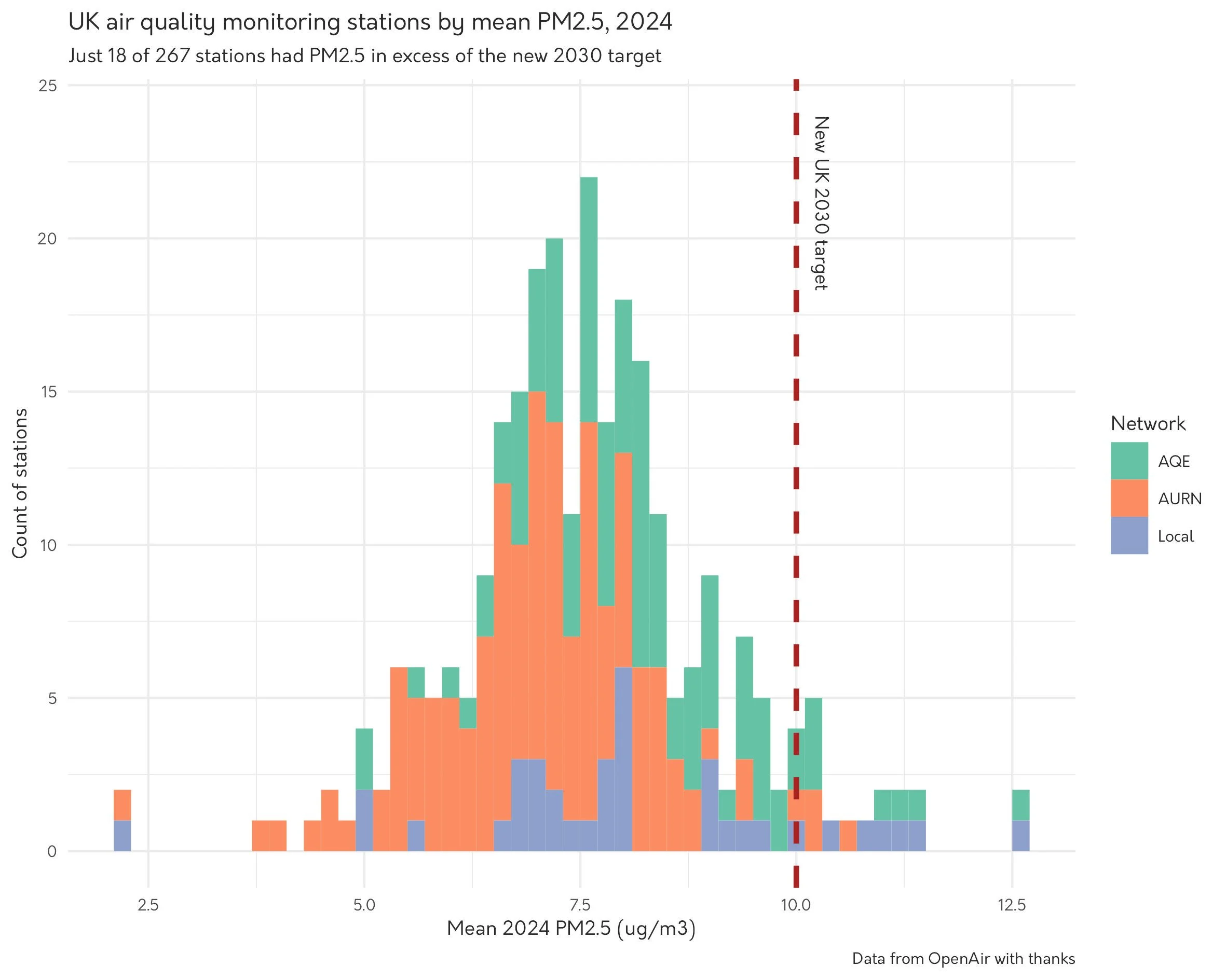
But is this target fit for purpose? Looking at data from three of the UK's regulatory air quality monitoring networks, it appears that the vast majority of stations met the target already in 2024! Just 18 stations - 7% of the total - had annual mean concentrations higher than 10µg/m³. And while concentrations were higher in urban areas, no class of station consistently exceeded the target.
Since these are the stations which will be used to determine exceedances, it's safe to say the government will meet its goal.
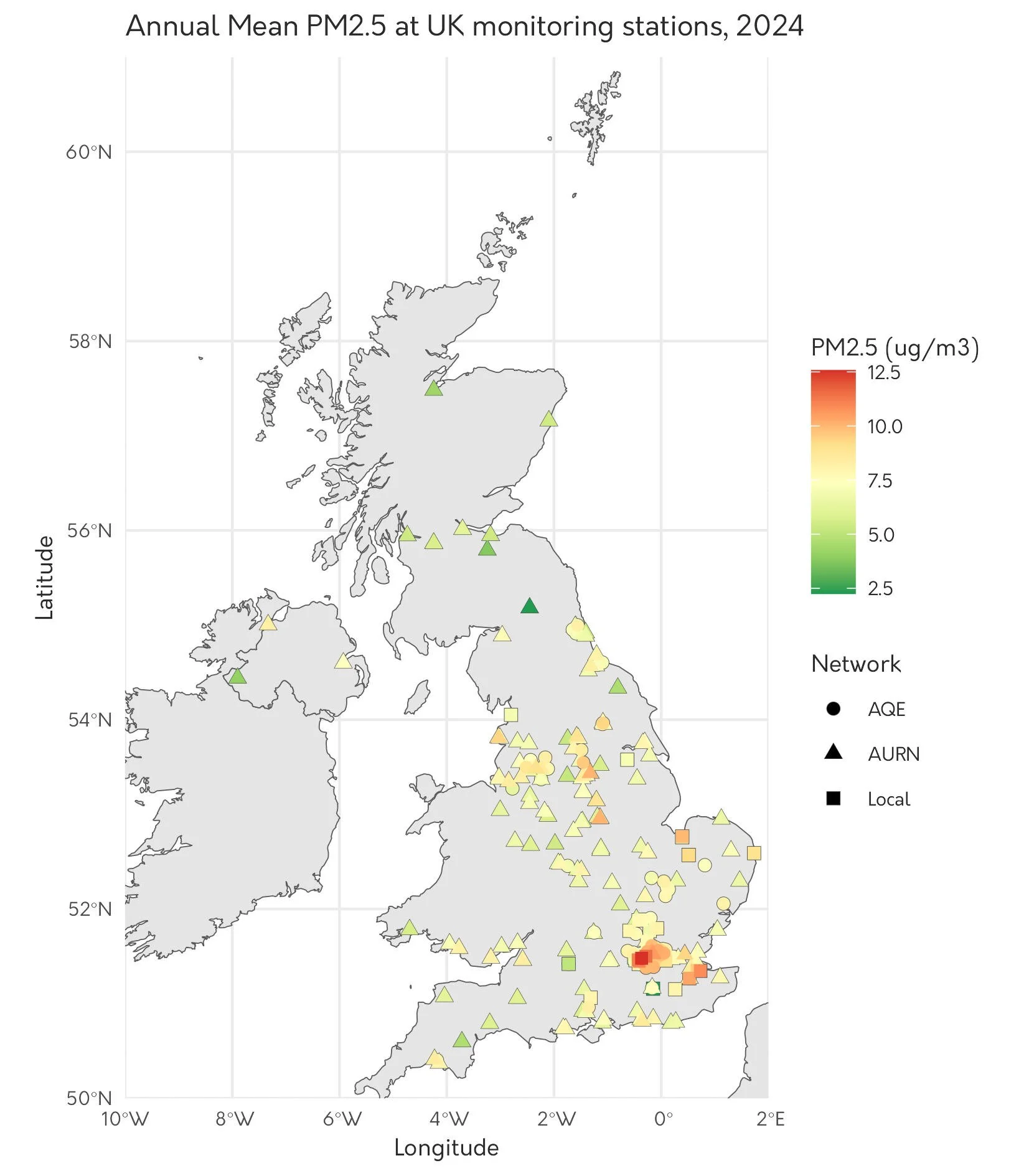
Exposure to PM2.5 in the UK isn't driven by ambient outdoor air. It occurs on the personal and hyperlocal level - exposure to woodsmoke in and around the home, second-hand tobacco smoke (still a serious issue, particularly in disadvantaged areas), and occupational exposure among other causes. Tackling this means new, difficult approaches - much harder than picking a number.
As it stands, this pledge seems like a damp squib.